Gray Silky-flycatcher
This bird family, the silky flycatchers (Ptiliogonatidae), contains four species, all found exclusively in Central America and the southwestern U.S. They are sleek, elegant birds and closely related (probable “sister species”) to the familiar waxwings.
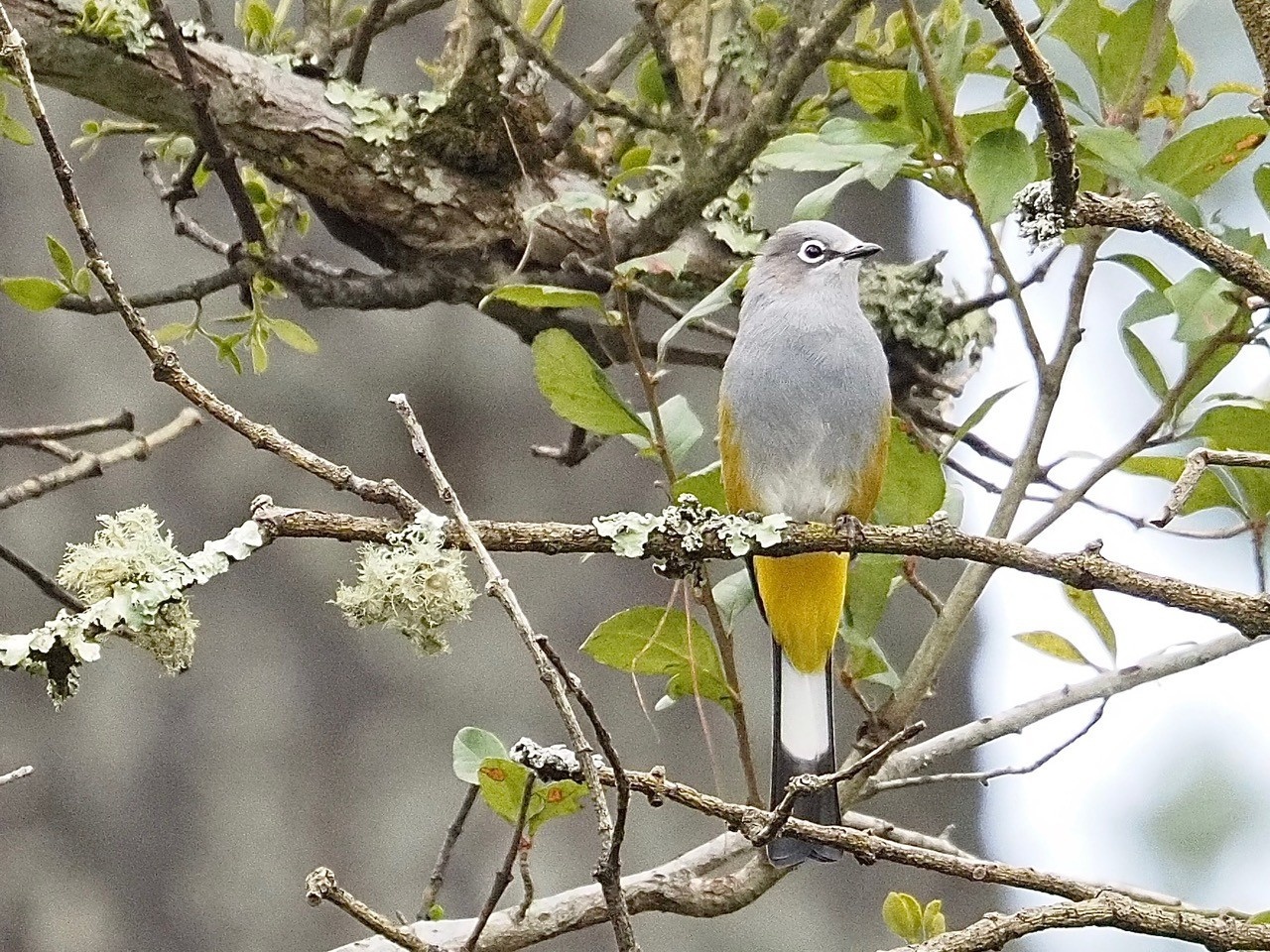
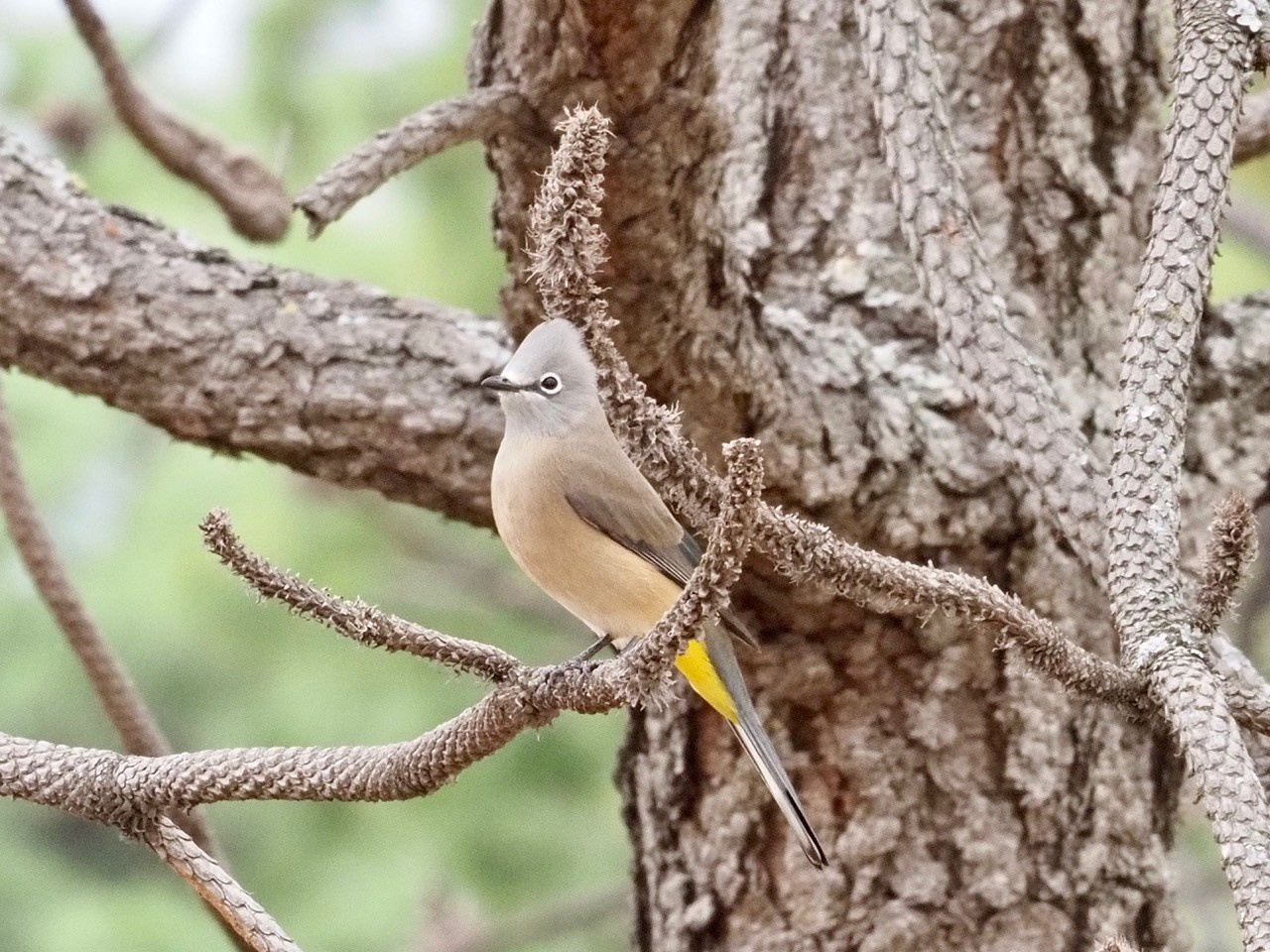
One family member, the Phainopepla (P. niens), is rare in the Chapala area. Fairly common is the Gray Silky-flycatcher, an eye-catching, even flamboyant, bird with a long, slender tail and a prominent crest. As the name “silky” suggests, its plumage has a velvety texture. Indeed, the plumage shows some of “the most understated elegance in texture, shade, and form of any birds” (source: Birds of the World). The upperparts are a silky gray extending down onto the upper breast, contrasting starkly with a bright yellow underbelly and a conspicuous black-and-white tail. The females are not quite as flashy as the males. Both sexes have a bright, white eyering.
Although named “flycatchers”, fruit is more common than insects in the diet. As with other frugivores, GRSFs are somewhat nomadic, roaming around in search of available tree fruit. That said, they are often noticed sallying out from trees, catching insects on the wing. Because they tend to occur in flocks of up to a dozen or more birds, concentrated near a food source, they are usually easy to observe, perched in the tree tops chattering and chortling or taking short sallying flights while flycatching.
As with other Ptiliogonatids, Gray Silkys are monogamous. Nests usually contain two eggs and both parents care for the chicks.
GRSFs are found mostly in montane forests where they are generally resident, but wander into adjacent, more open habitat where there are scattered trees.
Mistletoe berries (Psittacanthus schiedeanus) are an especially important food source and numbers of birds present may vary with abundance of ripe mistletoe fruit.
Gray Silkys are fairly common throughout much of their range, though not seen on every outing lakeside due to their wandering habit. When encountered, their beauty and liveliness adds a welcome “icing” on one’s birding day!